Product Placement
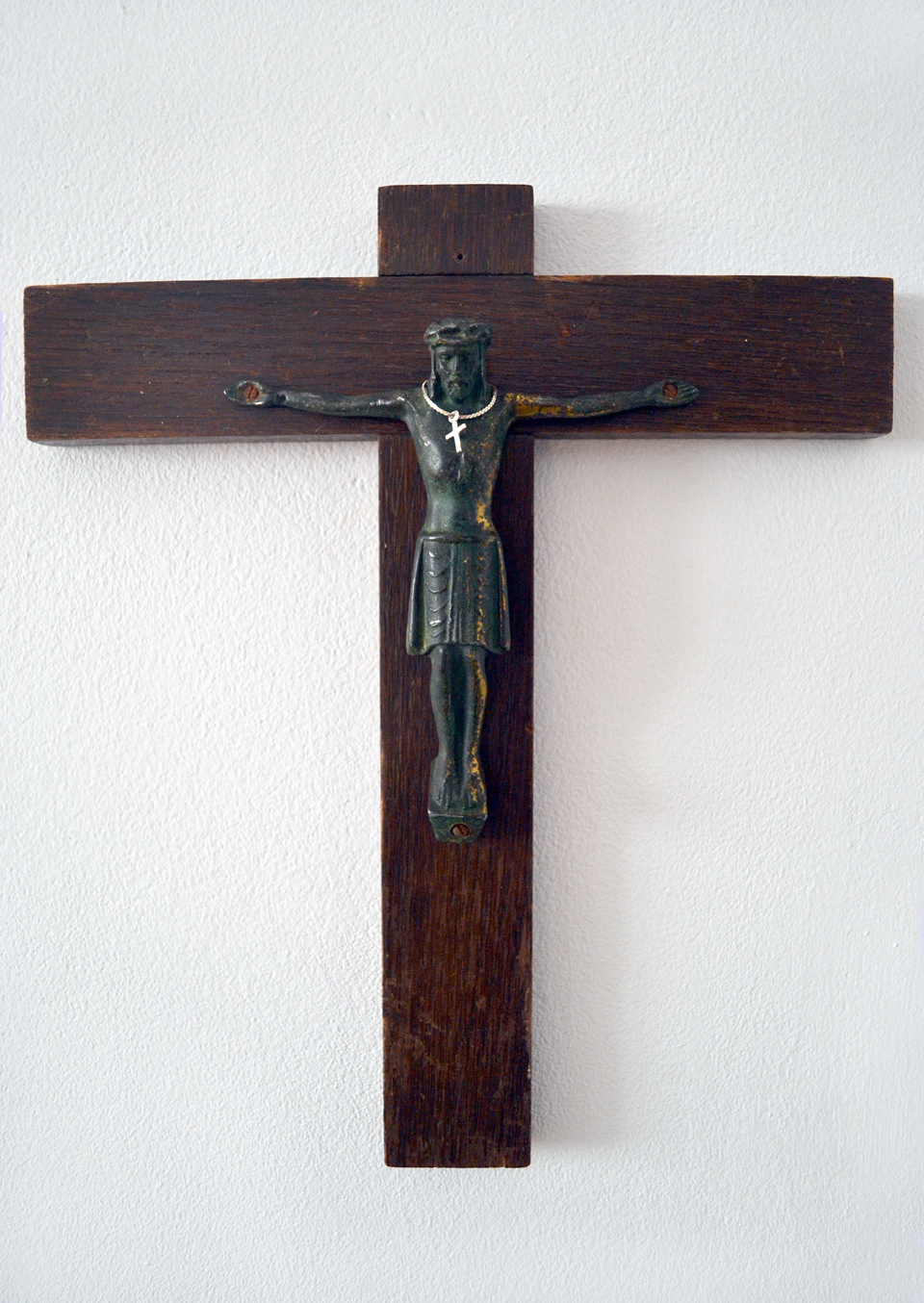
Product Placement - wood, bronze, silver, 30 x 25 x 4 cm, 2012, Anton Terziev. Photo: © the artist Courtesy of the artist
Credit: Samuil Stoyanov
Shown twice - at CONTEMPORARY TOOLS OF LABOR exhibition – ICA, Sofia, 2012 and Swallowed Senteces - group exhibition at +359 gallery, Sofia, Bulgaria, 27. 09 - 22. 10. 2023
Product placement is criticizing the haughty tightness of the orthodox dogmatic. “Mummified” behind the comfortable hermeneutics rather that saying the “good news”, the church is selling a trade mark with it`s aggressive merchandising and the promise for added value.
*paid ad in which a particular good or service is involved in the context of a different product. The warning for a paid ad is necessary.
Продуктово позициониране критикува надменната херметичност на православната догматика. Мумифицирана зад удобна херменевтика, вместо да артикулира “добрата вест”, църквата продава търговка марка с агресивен мърчандайзинг и обещание за добавена стойност на покупката.
* платена реклама, при която дадена марка,стока или услуга е включена в сюжета на друг продукт, като предупреждението за скрита реклама е задължително.
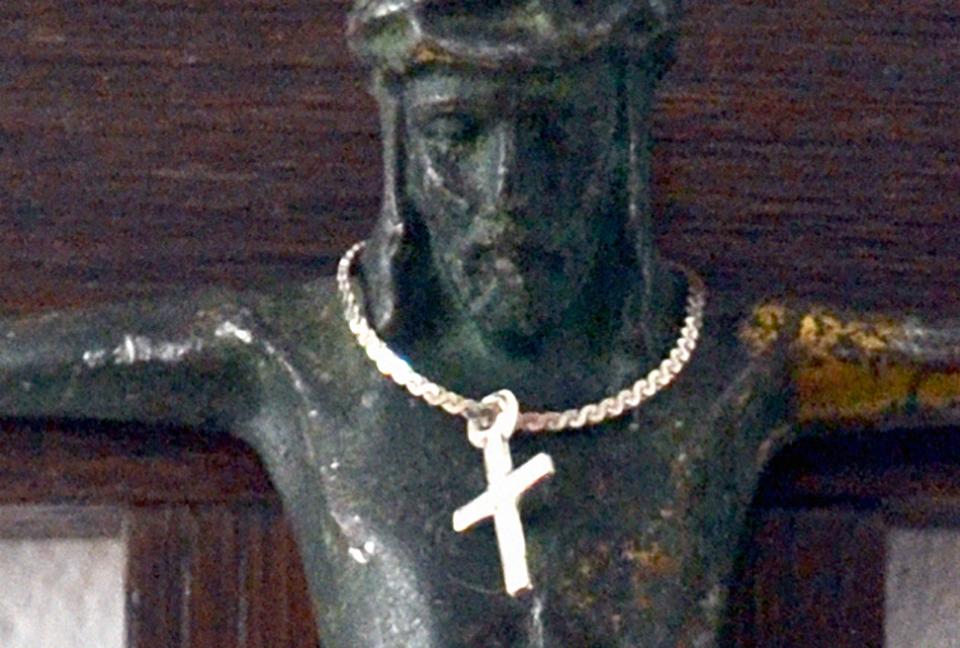
Product Placement - detail. Photo: © the artist
Anton Terziev’s *Product Placement* is a compelling example of how contemporary art can engage with and challenge established religious iconography and its broader cultural implications. By merging a familiar Christian symbol—a wooden crucifix—with an unexpected detail of a second cross hanging around the figure’s neck, Terziev creates a layered, thought-provoking work that asks viewers to question the relationships among faith, consumerism, and visual culture.
In Western art history, the crucifix has functioned as a profoundly charged symbol for nearly two millennia. Traditionally, it signifies Christ’s sacrifice and the promise of redemption, central tenets of Christian theology. Sculpted crucifixes became widespread in medieval Europe, flourishing particularly in Romanesque and Gothic periods, where they served as didactic tools and objects of devotion.
Terziev’s piece subverts this long-established tradition by introducing a contemporary twist: the figure on the cross wears a necklace with a cross pendant. This self-referential detail points to a layering of symbolic meaning. On the one hand, the repeated cross motif underscores how easily sacred imagery can become a recognizable “brand.” On the other, it prompts reflection on how the crucifix itself has been recontextualized over centuries—reproduced, merchandised, and often worn as a fashion accessory.
The artwork’s combination of materials—a wooden cross backboard and a metal or metal-like figure—echoes older crucifixion sculptures that often featured wooden crosses with a sculpted Christ. The worn texture and patina suggest age or wear, imbuing the piece with an air of authenticity and tradition. Yet, in contrast to a classical crucifixion scene, the figure here appears simplified and stylized, evoking modern sculpture’s interest in streamlined forms.
The small, prominent necklace with a cross stands out against the dark figure, drawing the eye to a curious doubling of the cruciform symbol. This detail can be interpreted as a statement about the commodification of religious emblems—almost as if the crucified figure is now “endorsing” the very symbol that led to his own sacrifice.
By referencing “product placement,” Terziev directly invokes the language of modern advertising and corporate sponsorship. The phrase typically describes a marketing strategy in which brands pay to have their products integrated into popular media, from films to social media posts. Here, that concept is provocatively applied to a religious icon, implying that even the most sacred imagery can be caught in the currents of commodification and brand awareness.
Over the centuries, the cross has transcended purely religious contexts to become a widespread decorative motif, worn by believers and non-believers alike. In *Product Placement*, Terziev seems to point out the tension between genuine devotion and the cross as a fashionable accessory. This raises questions about authenticity in faith practice, the role of symbols in shaping identity, and how consumer culture often reduces spiritual icons to mere trends.
In religious contexts, a crucifix is meant to evoke reverence and empathy. Terziev’s version, however, might generate discomfort or puzzlement. By doubling the symbol, he transforms a traditionally solemn image into a contemporary critique, suggesting that the commercial world has all but absorbed even the most sacred images.
Terziev’s *Product Placement* can be positioned alongside works by other contemporary artists who engage with religious iconography in critical or ironic ways—such as Andres Serrano’s *Piss Christ* or Chris Ofili’s *The Holy Virgin Mary*. While these works differ in medium and tone, they share a strategy of placing religious symbols in contexts that challenge viewers’ assumptions. Terziev’s approach is less overtly confrontational than some of these infamous pieces, but it operates in the same conceptual space, probing the limits of reverence and the transformation of sacred objects into commodities.
Depending on the viewer’s background, *Product Placement* may elicit a wide range of reactions—from admiration of its craftsmanship and daring concept to discomfort or even outrage over what might be seen as trivializing a sacred image. Such varied responses are part of what makes contemporary art powerful: it refuses to leave the viewer in a state of passive acceptance. Instead, Terziev’s work demands active engagement and critical thought.
Anton Terziev’s *Product Placement* is a succinct yet provocative commentary on the commodification of religious imagery in the modern world. By integrating the language of marketing—“product placement”—into a crucifix, the artist challenges viewers to confront how consumer culture has permeated even the most sacrosanct domains. The piece thus situates itself within a lineage of modern and contemporary art that uses religious iconography to question broader societal structures. As a result, *Product Placement* stands as both a homage to and a critique of the crucifix’s enduring visual power, underscoring how easily sacred symbols can be co-opted in an era where faith, fashion, and commerce intersect.