Black Whiteness / Private Societies III
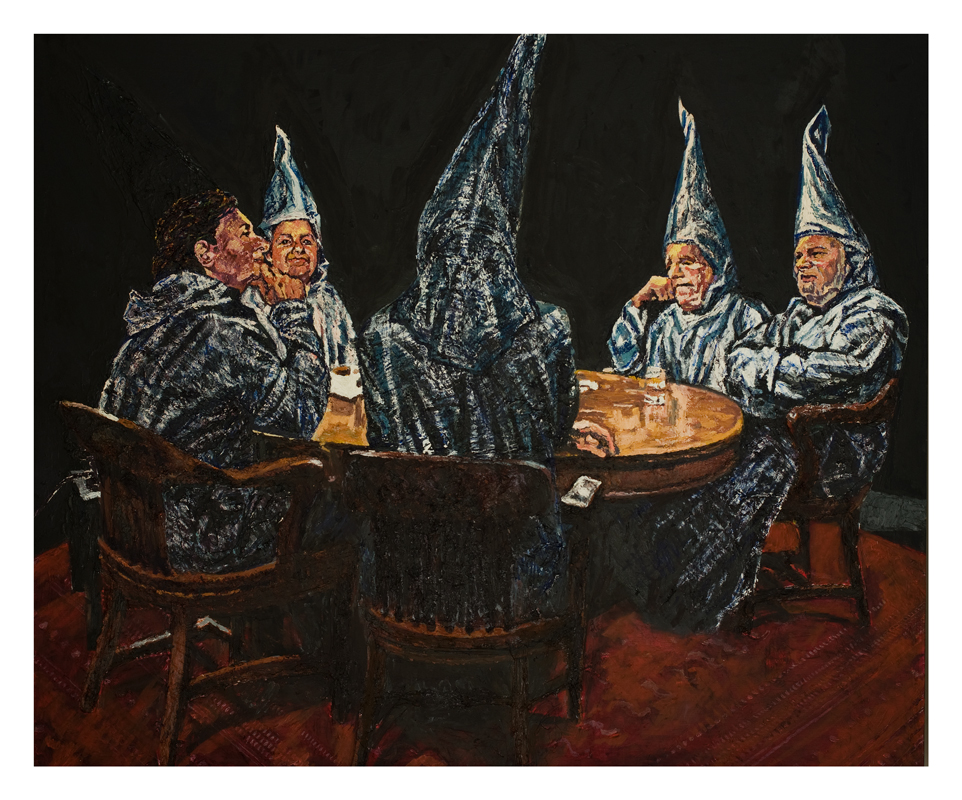
Black Whiteness / Черна белота / Private Societies III - Size: 105 x 130 cm, Schmincke oils on canvas, 2018, Anton Terziev. Photo: © the artist. Courtesy of the artist
Title credit: Svetoslav Todorov - editor, writer, correspondent (fotomaterial used: Charlie Rose' CBS TV show)
Photos: Vasil Tanev
"Anton Terziev soomehow channeled the five members of the US Supreme Court back in the 2018"
26.06.2022 Svetoslav Todorov is refering on the devastating news that millions of women in the US will lose the constitutional right to abortion, after the Supreme Court overturned its 50-year-old Roe v Wade decision.
The painting is part of Small Victories solo exhibition, Arosita Gallery, Sofia, 2019
Private Societies I
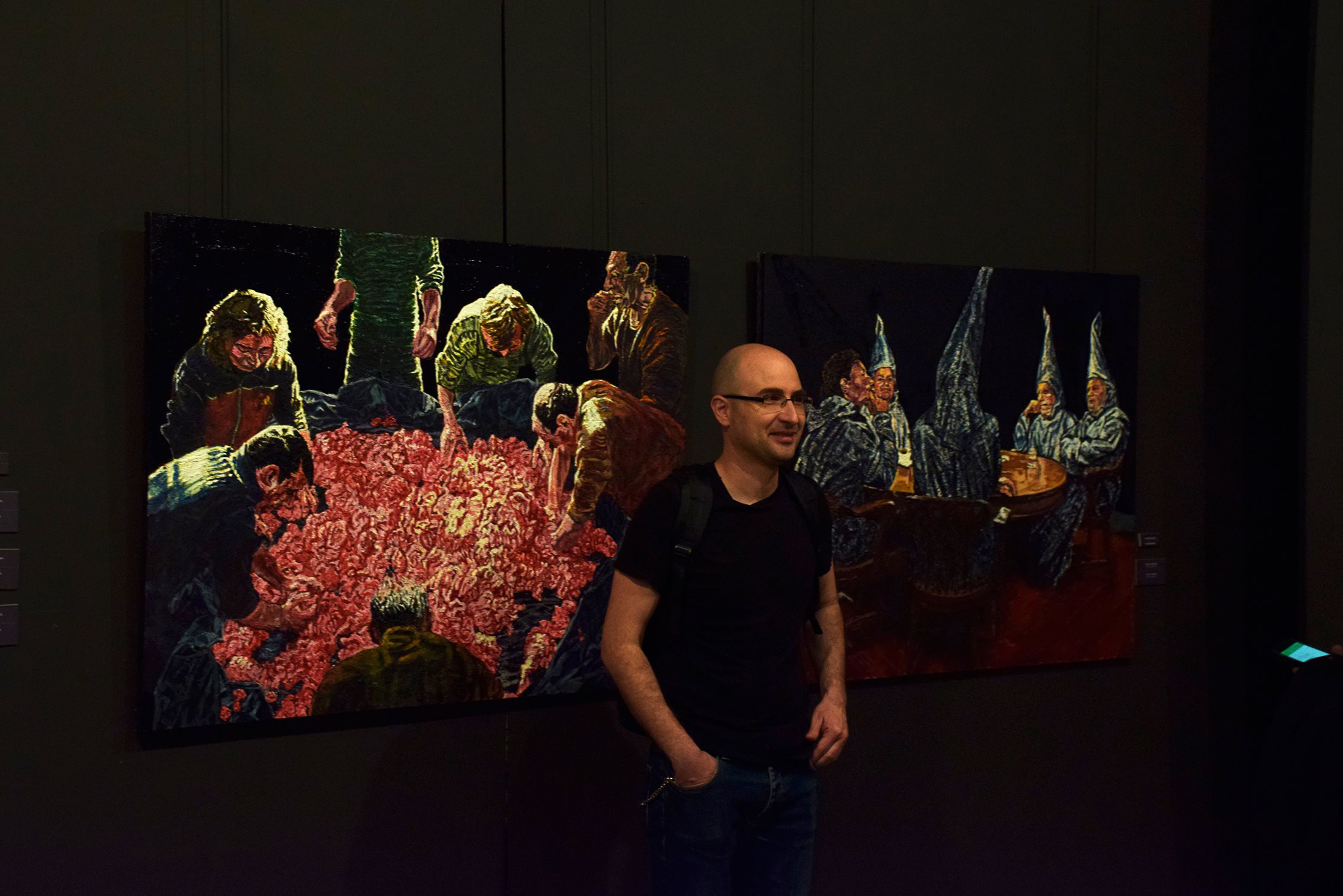
Beat Meat Manifesto and Black Whitenss paintings from Private Societies seria at Alianz Bulgaria National Competition; Prize nominated
Photo credit: Srtanislav Belovski, 2018
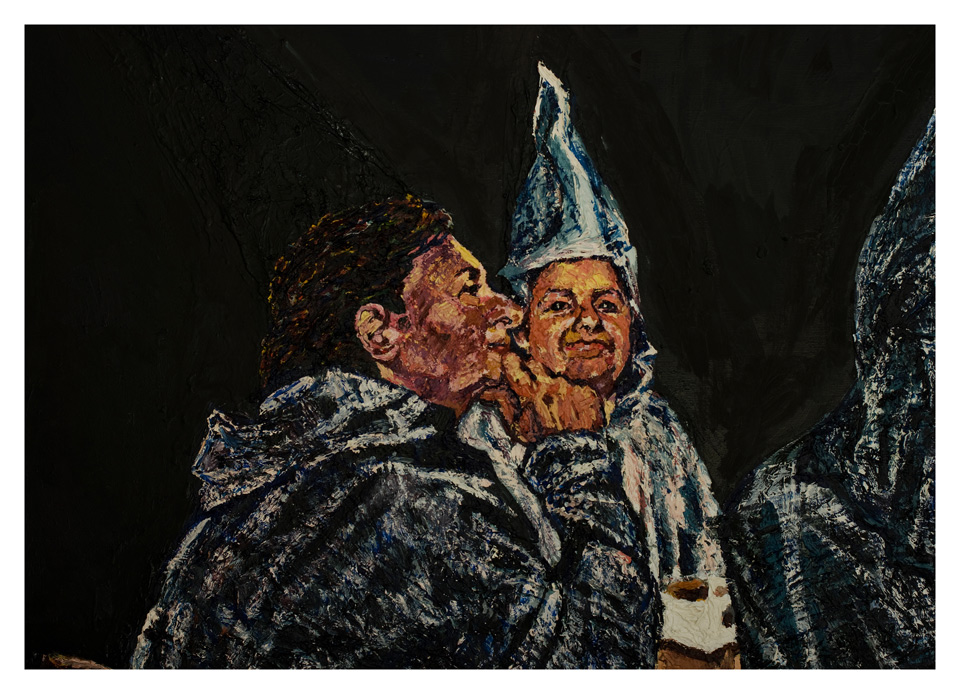
Black Whiteness - detail. Photo: © the artist
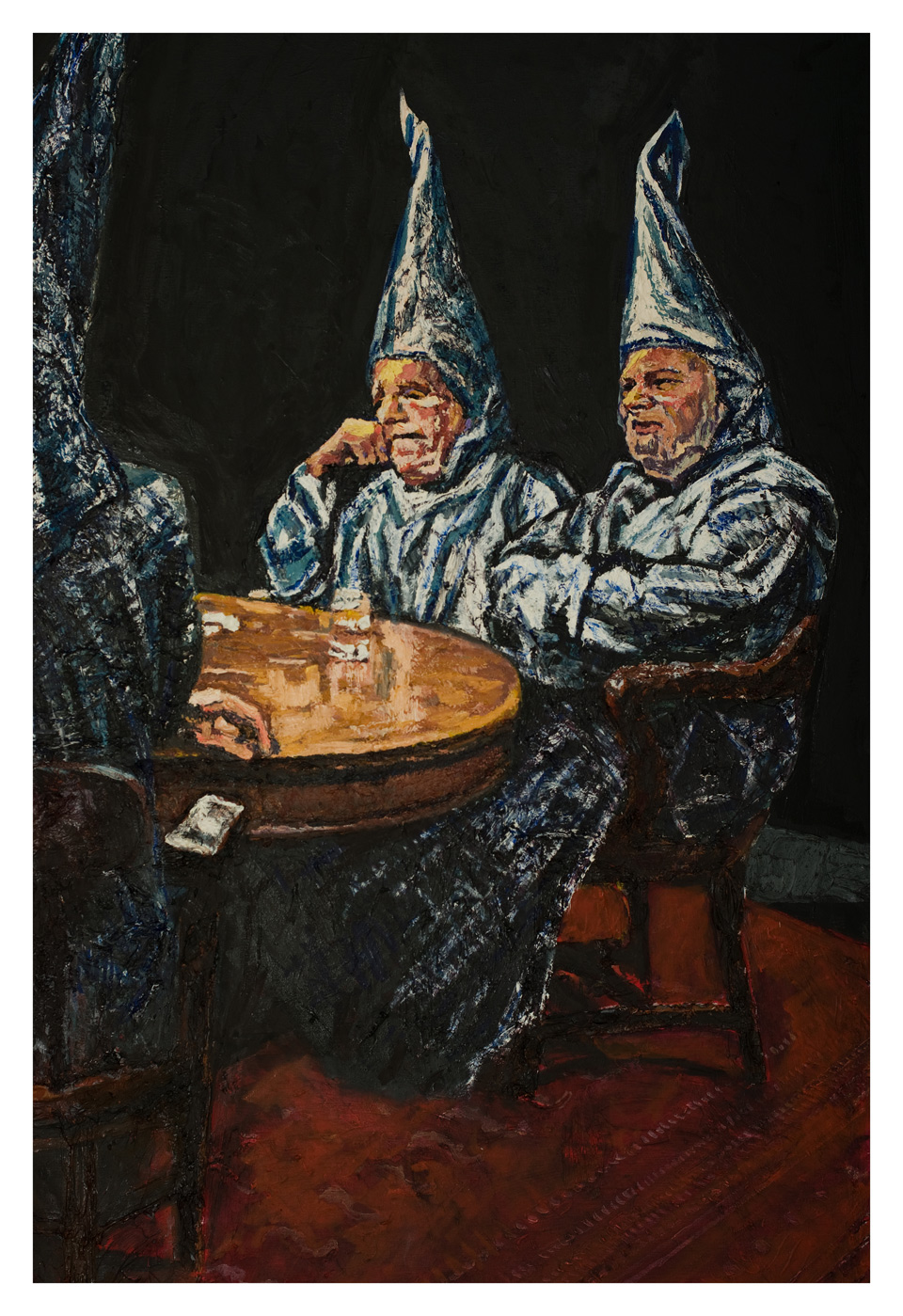 Black Whiteness - detail. Photo: © the artist
Anton Terziev's *"Black Whiteness / Private Societies III"* is a striking and provocative exploration of secrecy, power, and the dark undercurrents of political and social structures. Through the use of bold colors, stark imagery, and unsettling subject matter, Terziev confronts the viewer with the disquieting realities of exclusionary organizations, ideology-driven groups, and the dangers inherent in unchecked power dynamics.
In this painting, the viewer is presented with a group of individuals wearing the unmistakable garb of the Ku Klux Klan, their pointed hoods casting an oppressive shadow over the table where they sit. The figure in the foreground is caught in a moment of reflection, their hand propping up their head in contemplation, while the others seem either to be engaged in quiet conversation or lost in their own thoughts. The ominous black background amplifies the sense of isolation and secrecy, suggesting a hidden world where discussions of power, race, and privilege unfold behind closed doors.
The title itself, *"Black Whiteness,"* is a powerful contradiction. It underscores the tension between the concept of race—an often oversimplified and divisive societal construct—and the ways in which whiteness, in particular, is often protected and perpetuated in private spaces. These spaces, embodied in the form of the secluded table and the hoods the men wear, function as microcosms of the wider societal structures that continue to perpetuate racial inequality and discrimination. The use of "black" here not only refers to the marginalized race but also evokes the shadowy and sinister nature of these groups and the violence they often espouse.
The decision to render the figures in oil with textured, heavy strokes further enhances the sense of discomfort. The figures appear almost sculptural, as though their rigid, inflexible nature reflects the unyielding ideologies they represent. The roughness of the strokes mirrors the brutality of their belief systems, a tension between form and content that reinforces the brutality of their views and actions.
There is also a chilling sense of normalization in the way Terziev presents these individuals. They are not portrayed as grotesque, monstrous figures; instead, they appear as ordinary men, engaged in what seems like a banal moment of conversation over drinks. This sense of normality adds another layer of horror, suggesting that these groups—despite their abhorrent beliefs and actions—are not outliers, but integral parts of the political and social systems that we must confront. This portrayal exposes the dangerous complacency of modern society in accepting or ignoring the existence of such ideologies.
What stands out in *"Black Whiteness / Private Societies III"* is the way Terziev not only confronts the viewer with a stark visual representation of hate groups but also subtly warns about the continued and often invisible presence of such groups in contemporary politics. The dissonance between the seemingly innocuous setting—a private gathering, a quiet moment—and the sinister history and goals of these groups invites the viewer to reflect on the enduring power of such ideologies and the silence that often surrounds them.
This painting is visionary in its ability to distill complex and disturbing political themes into a visceral, immediate image. It acts as both a historical reminder and a warning, urging the viewer to remain vigilant in the face of discrimination and violence. The painting not only critiques these private societies but also challenges us to examine the broader political and cultural forces that enable their continued existence and influence. Terziev’s work, through its unsettling and intense portrayal of these figures, makes an undeniable statement about the dangers of racialized power structures and the urgent need to confront them.
"Anton Terziev soomehow channeled the five members of the US Supreme Court back in the 2018"
26.06.2022 Svetoslav Todorov is refering on the devastating news that millions of women in the US will lose the constitutional right to abortion, after the Supreme Court overturned its 50-year-old Roe v Wade decision.